

Description
Practice baseballs are the one piece of equipment a coach goes through faster than anything else. They get lost in the outfield, chewed up by pitching machines, and left behind in the dirt. That is why we sell ours in packs — and why every ball in the pack is built the same way.
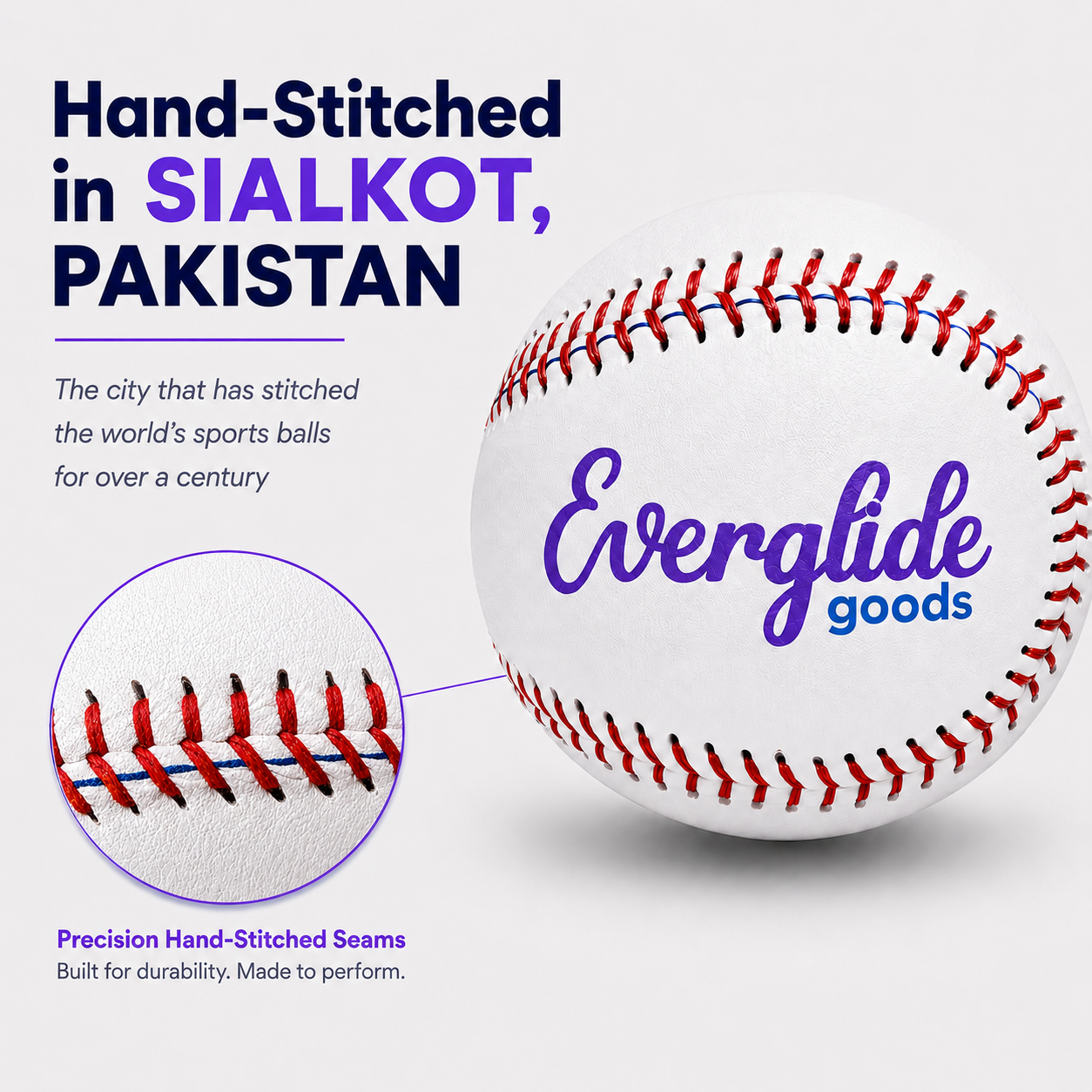
Hand-stitched in Sialkot, Pakistan
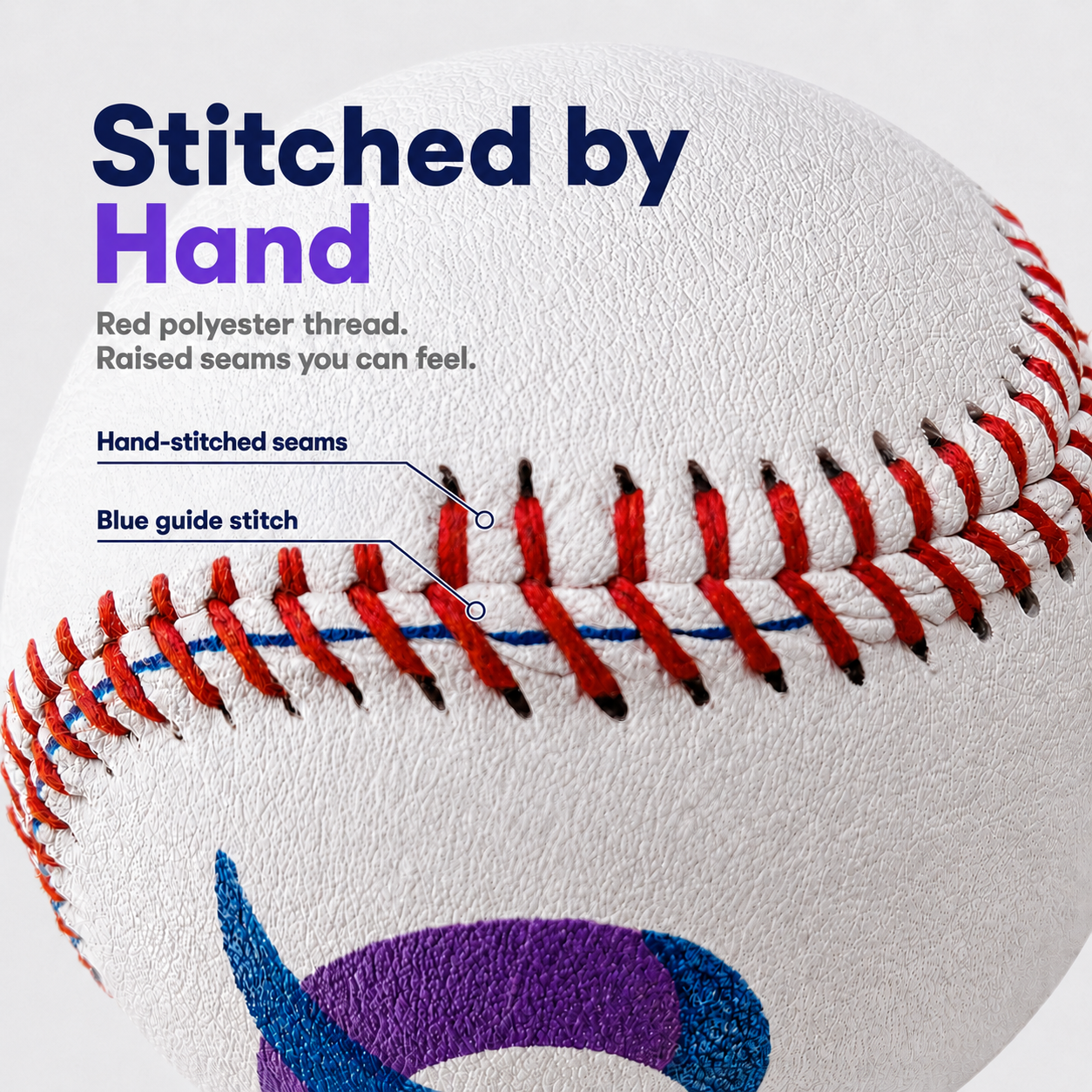
Sialkot has been stitching the world’s sports balls for over a hundred years. Every EverGlide baseball comes from that tradition — stitched by hand with red polyester thread, seam by seam, by people who have done this work their whole lives.
Not machine-pressed. Hand-stitching is slower and it costs more, but it produces raised seams with a grip you can actually feel, and a ball that holds its shape instead of flattening on one side after a hard week.
Official size and weight, ball to ball
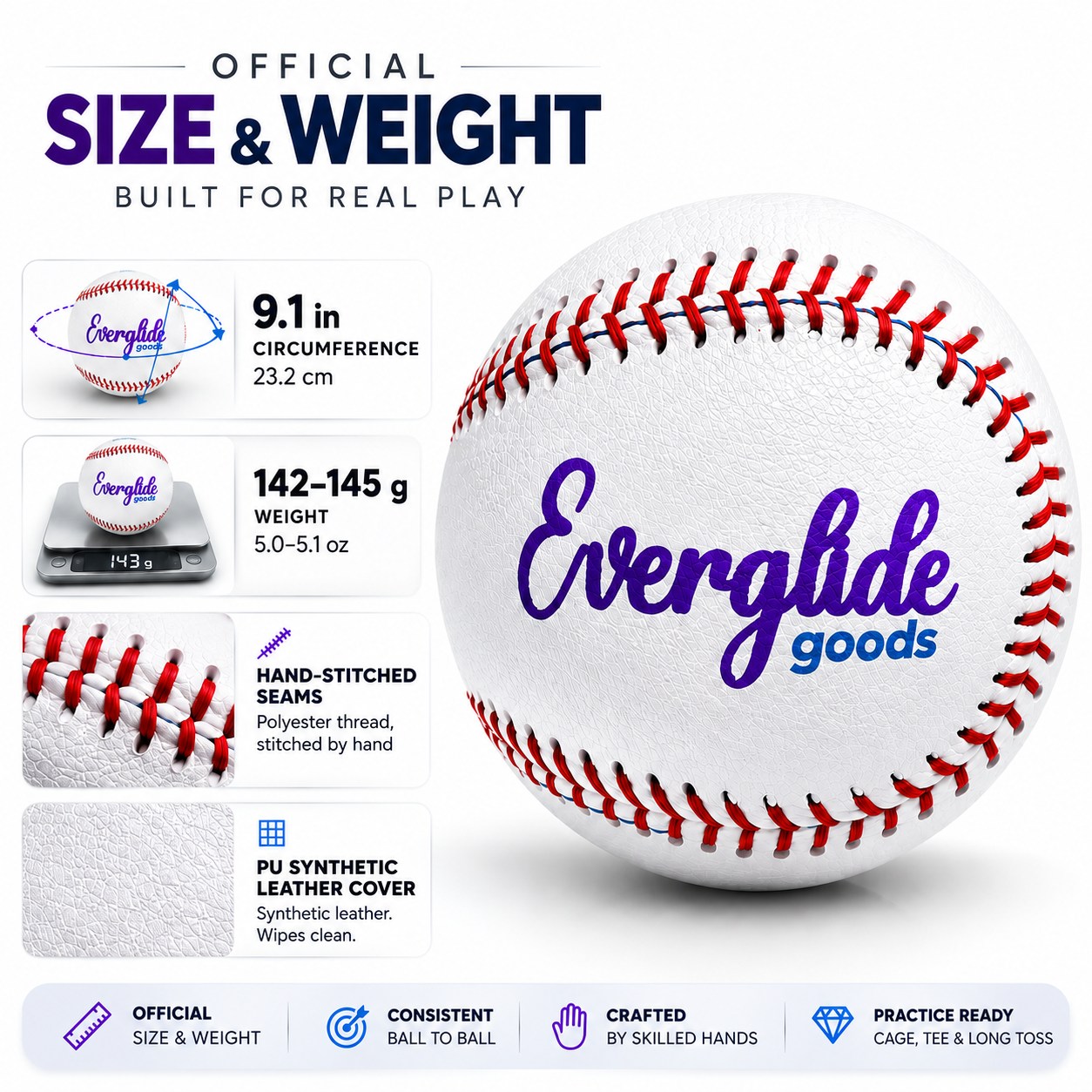
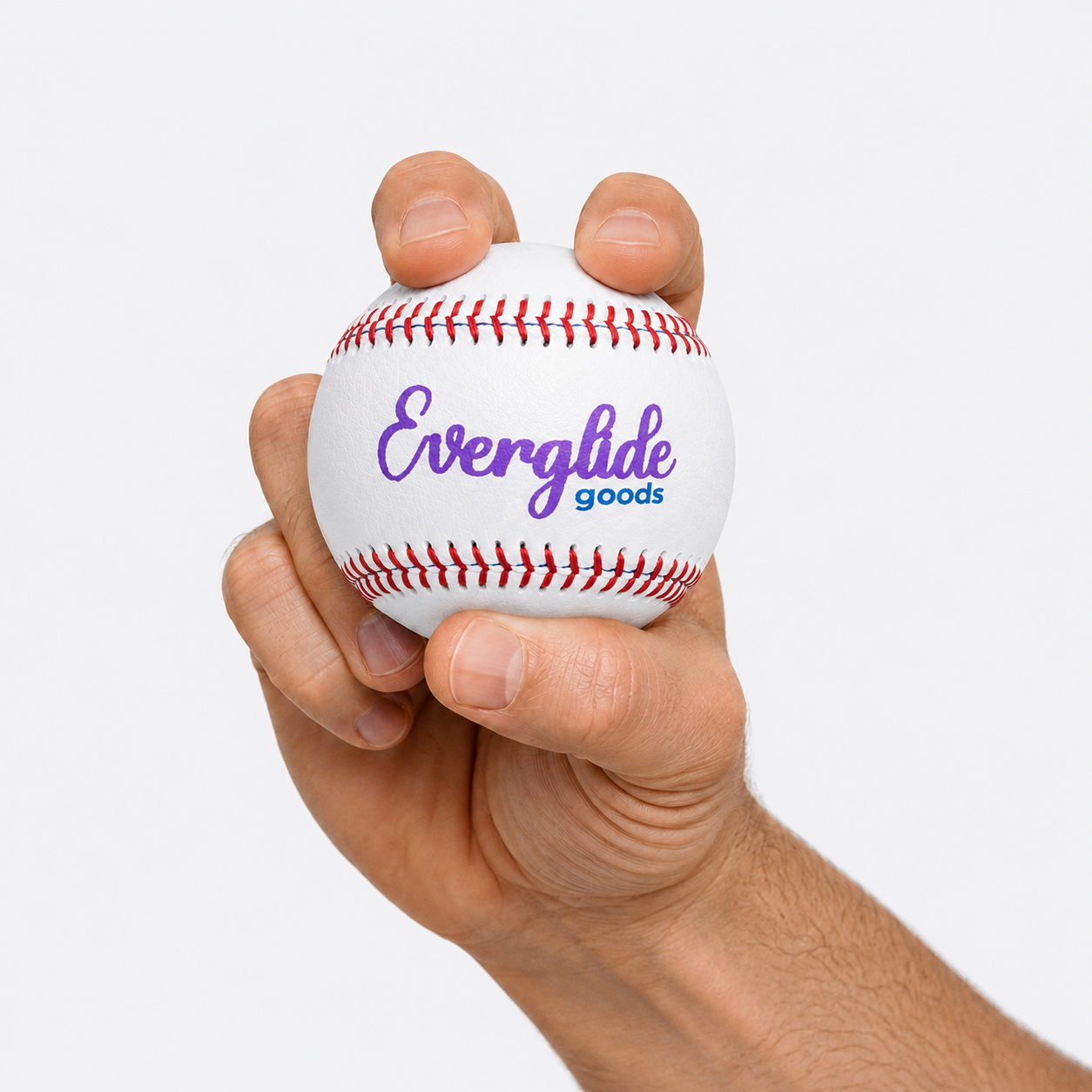
Every EverGlide ball measures 9.1 inches in circumference and weighs 142–145 grams (5.0–5.1 oz) — inside official specification, and consistent across the pack.
Consistency is the entire reason to buy a dozen at once. A ball that changes weight or shape between reps teaches you nothing. You end up coaching around the equipment instead of the swing, and the player learns a timing pattern that falls apart the moment they face a properly weighted ball.
For reference on how these dimensions are defined, see the technical overview of baseball construction and dimensions.
Practice baseballs built for repetition
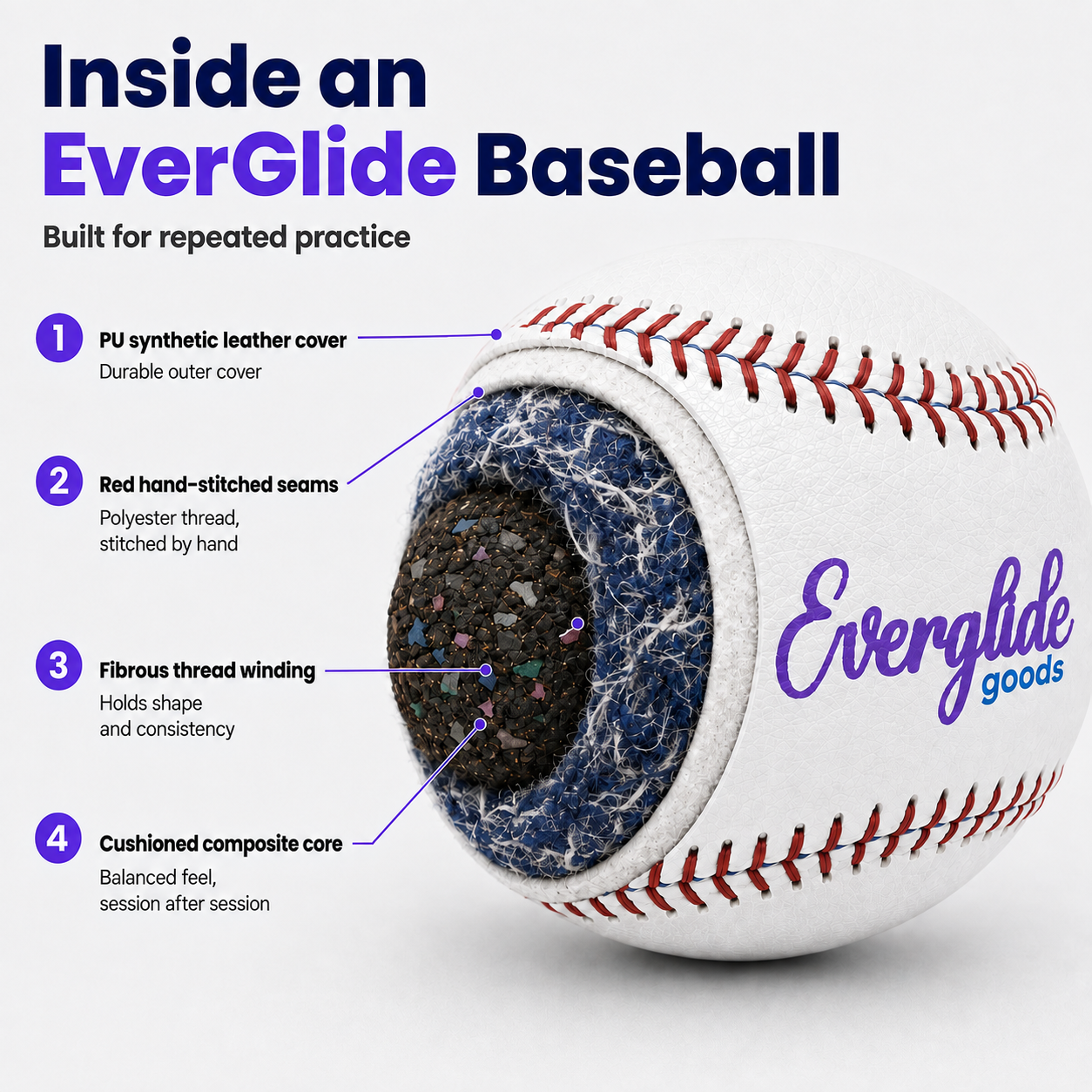
Inside the cover sits a cushioned rubber-and-polymer composite core wrapped in multi-layer thread winding. That combination gives balanced flight and a predictable feel off the bat, session after session.
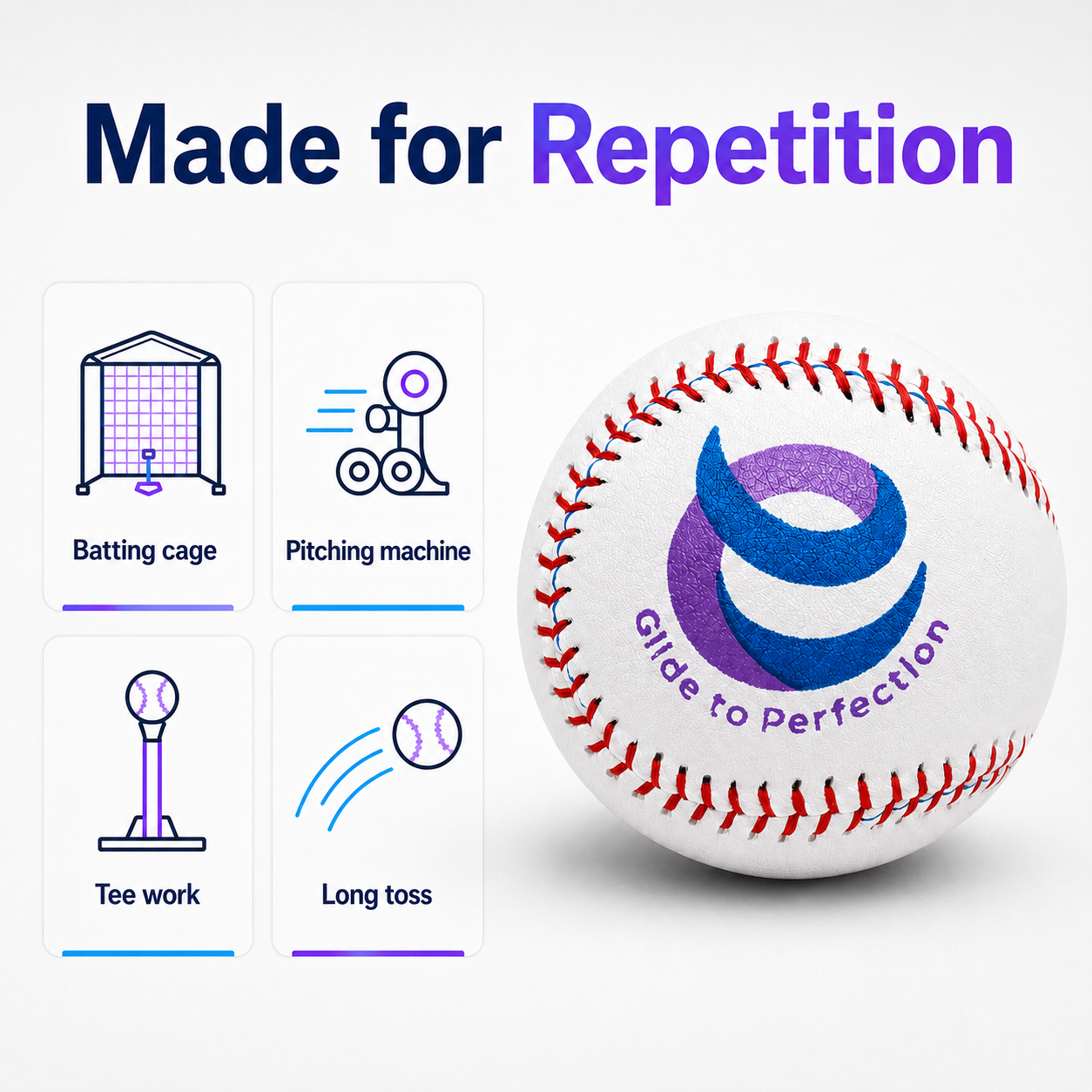
The PU synthetic leather cover holds its shape through batting cages, pitching machines, tee work and long-toss, and wipes clean after an afternoon on dirt. Raised seams, hand-stitched with red polyester thread, give you something real to grip for four-seam, two-seam and breaking-ball work.
These are practice baseballs, built for volume and repetition — not display pieces.
How many practice baseballs do you need?
The most common mistake is buying too few and spending half of every session collecting them.
| Pack | Best for |
|---|---|
| 2 Pack | A spare pair in the bag, or a gift |
| 6 Pack | One drill station, or a small squad |
| 12 Pack | Filling a bucket, loading a pitching machine |
| 18 Pack | A full team practice without stopping to collect |
A rough guide: one player working a tee gets through a 6 pack comfortably. A pitching machine session for two or three players needs 12 minimum. A full team practice with multiple stations wants 18 or more.
Who these are for
Youth and adult players. Coaches running drills. Academies, schools and rec leagues. Parents who want their kid taking cuts in the backyard without running out after ten swings.
Anyone who has stopped a session halfway through to go looking for balls in the grass.
Caring for your practice baseballs
Get more sessions out of each one:
- Wipe them down after dirt sessions. A dry cloth is enough. Dried mud in the seams works the thread loose over time.
- Store them dry. A ball left damp in a bag will hold moisture in the winding and lose its shape. Empty the bucket after a wet practice.
- Rotate through the pack. Using the same two balls every session wears them out at three times the rate. Spread the work across all of them.
- Retire flattened balls to soft-toss. Once a ball loses its round shape it is no longer teaching accurate contact — but it is still fine for warm-ups and short-toss drills.
Kept properly, a set of practice baseballs will see you through a full season.
Buying for a team, club or academy?
We supply clubs, academies, schools and dealers at trade pricing. See our wholesale page for bulk rates, or browse our other sports equipment.
Handcrafted in Sialkot, Pakistan.